El-Ferka is an ancient handicraft that dates back to the era of the Pharaohs.
It was famous in the city of Naqada, south of Qena Governorate, for hundreds of years.
It was used by Naqada families in homes and exported to Sudan, some African countries, and European countries.
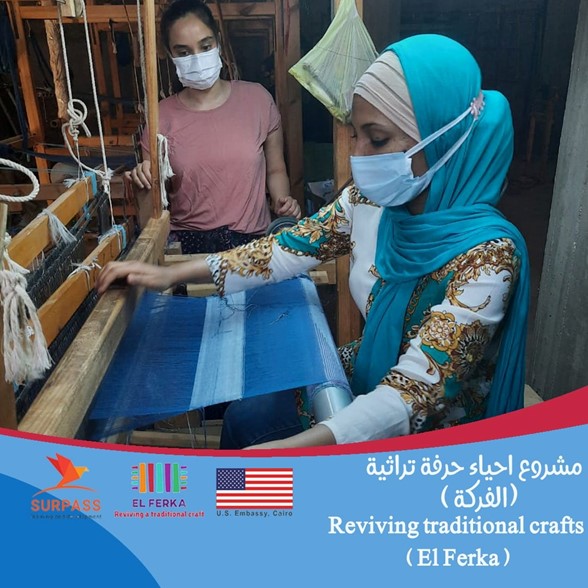
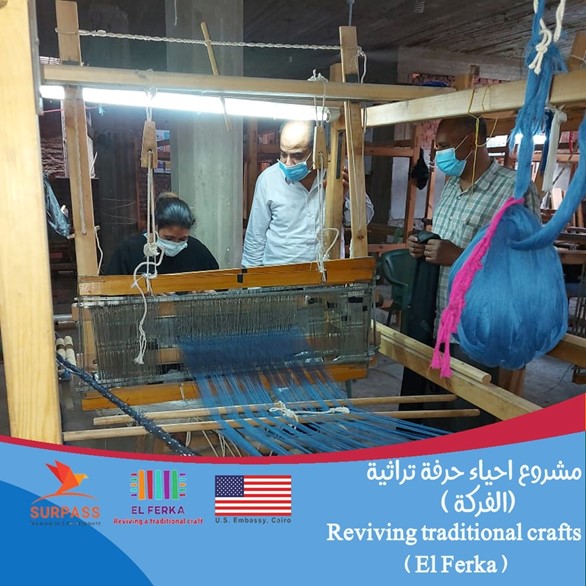
Its manufacture depends on the Pharaonic hand loom that is built on the ground.
The modern loom that is higher than the ground also entered into its manufacture.
El-Ferka is a hand-woven textile that is prepared using a hand loom and uses silk threads
El Ferka is the official costume of African women who wear their clothes from hand-woven textiles, whether in the manufacturing or sewing stage.
The Pharaonic wooden loom is used to produce the Farka, for which a hole one meter deep is dug in the ground and the loom is placed in front of it.
The Ferka was used in the Pharaonic era to manufacture shrouds for the dead and priests’ clothes, and this was discovered during archaeological excavations in 1907 when a room was found prepared for weaving threads with the hole loom currently used in Naqada.
The threads used in making the Ferka pieces are silk threads, book threads and fibran.
The number of hand-looms in Naqada has declined to become less than 250 looms after most of the city’s residents worked in the industry.
The prices of a piece of Ferka range from 35 pounds to 300 pounds per piece.
The areas where the Ferka industry is concentrated are in the city of Naqada and the village of Khatara.
It was registered as hand-woven in Upper Egypt on the UNESCO lists of intangible cultural heritage preservation.
Team Members:
Heba Sayed, Nermin Nassif, Roshdy Sobhy, Shaimaa Abd El-Hamid
Place: Naqada
Year: 2024
https://www.facebook.com/elferkawia2021